

Pricing · Sacramento McClellan Airport
What Flight Training Costs
$110 an hour for flight education — the aircraft and your instructor together, fuel and oil included — bought as you go. No membership fee, no deposit, no package to sign up for.

Our pricing
$110an hour of flight education, all in
One number, and nothing is added to it afterwards. The aircraft, your instructor, aviation fuel and oil are all inside it, billed for actual time in tenths of an hour, in the air and on the ground.
- $0
- separate instructor charge
- $0
- membership, enrollment or deposit
| What | Price | Notes |
|---|---|---|
| Flight education — aircraft and instructor | $110 per hour | All in: aviation fuel and oil included, instructor included. |
| Time on the ground with your instructor | $110 per hour | Same rate. Billed for actual time, in tenths of an hour. |
| Private pilot — typical total budget | $11,500–$13,000 | A planning range. What moves it is the hour count. |
| Instrument rating — typical total budget | $8,000–$12,000 | Depends on the cross-country PIC time you already hold. |
| Commercial pilot — typical budget | $8,000–$15,000 | Depends on how many hours you are missing at the start. |
| CFI — typical budget | $5,500–$8,000 | Mostly a teaching qualification; ground hours vary widely. |
| CFII — typical budget | $3,500–$6,000 | Added after the initial CFI. |
| MEI — typical budget | $4,500–$7,500 | Flown in the school’s Piper PA-44 Seminole. |
| Discovery Flight — 1 passenger | $200 | About 45 minutes in the air. Everything included. |
| Discovery Flight — 2–3 passengers | $300 | Same flight, subject to weight and balance. |
| Gift certificate — 1 passenger | $200 | Same price as booking it yourself. |
| Gift certificate — 2–3 passengers | $300 | Same price as booking it yourself. |
What the $110 Hour Covers
Your $110 hour is the aeroplane with aviation fuel and oil in it and your instructor sitting beside you. There is no second line to add to it.
Paid to other people: the FAA medical, the knowledge test, the checkride examiner, an online ground course if you use one, and your own supplies.
See all four aircraftHow the Time Is Counted
The $110 rate is the same for private, instrument, commercial, CFI, CFII and multi-engine training, whichever of our four aircraft you are flying. If you refuel away from McClellan, we credit the fuel at our current price per gallon against your receipt; anything above that price is yours.
- Flight time runs on the Hobbs meter. It starts when the engine starts and stops when it stops.
- Ground time is actual time, from the start of the planned briefing to the end of the debrief, rounded to the nearest tenth of an hour — at the same $110.
- A typical lesson carries 0.3–0.5 hours of ground time on top of the flight.
Where The $11,500 To $13,000 Comes From
Most schools publish a range and leave you to trust it. This one is arithmetic, so here it is in full — you should be able to rebuild the number yourself and check that we have not rounded in our own favour.
We plan on 65 to 75 hours in the aeroplane, and about 25 hours of ground instruction on top. Everything on that list is billed at the same $110, in the air or at a table, which makes it 90 to 100 paid hours: $9,900 at the low end and $11,000 at the high one.
Then the money that never reaches us. The online ground course is about $300, the FAA medical about $150, the knowledge test about $175, the examiner between $900 and $1,200, and your own headset, charts and kneeboard between $100 and $250 — $1,625 to $2,075 all told, and every dollar of it paid directly to the person providing it.
Add the two and you get $11,525 to $13,075, which is what the $11,500 to $13,000 on this page rounds to. The spread is about $1,500: roughly $1,100 of it is the ten-hour difference between a student who needs 65 and one who needs 75, and the remaining $450 is the range in the examiner's fee and what you spend on your own kit. Five things move you across it, and you control most of them.
- Cadence. Fly twice a week and each lesson starts where the last one stopped. Fly once a fortnight and the first part of every lesson is review, which at $110 an hour is the most expensive way to learn.
- Preparation. The reading you do at home is free. The same material learned in the aeroplane is $110 an hour.
- A long break. Three months away costs a couple of catch-up flights, not a restart — but it costs them.
- Weather. A cancelled slot costs nothing, and a run of them costs review time. Winter mornings in the Sacramento Valley lose more slots to low cloud and fog than summer mornings do.
- A second attempt at the checkride. It happens to people who fly perfectly well, and it costs the examiner’s fee again plus the flight — roughly $1,000 to $1,500. That one sits outside the range rather than inside it: the range is built on 65 to 75 hours and one checkride, so a retake adds to whichever end you land on. We would rather say so than quietly widen the band to hide it.
What You Don’t Pay
Six charges you will never see on an invoice from us, and one thing worth being precise about.
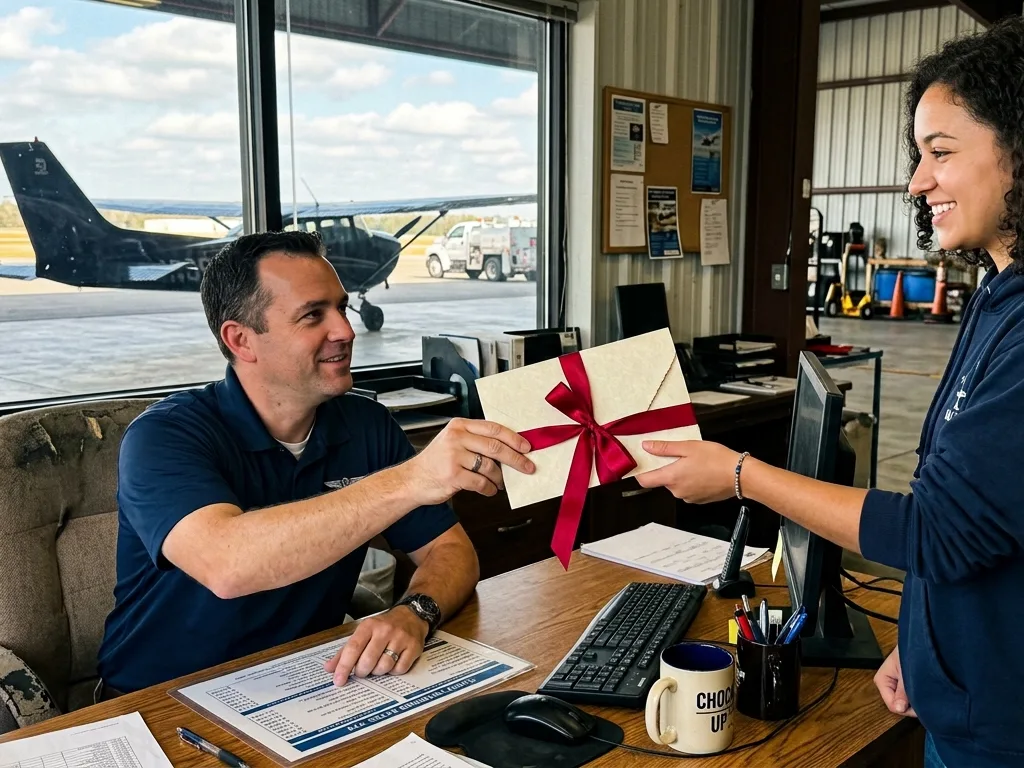
- No enrollment fee. Nothing to pay to start.
- No membership. You are not joining a club, and there is nothing to renew.
- No mandatory deposit. Nothing has to sit with us before you can book a lesson.
- No monthly minimum. Fly four hours one month and none the next, and you pay for four hours.
- No required prepaid block. You can pay lesson by lesson.
- No card surcharge. Paying by card costs the same as paying any other way.
To be precise about it: the aircraft and your instructor are one line at $110 an hour, and the medical, the knowledge test and the examiner are paid directly to the people who provide them. Every one of those figures is on this page, so you can budget the whole certificate before you start.
Why Pay-as-you-go Matters
Across the industry, students are commonly asked for a prepaid block of hours, a course fee, or a club membership before their first lesson — and the money sits with the school. That model is legal and often discounted, but it moves the risk onto the student: if plans change, if a schedule falls apart, or if the school does, the student is the creditor.
Here your money stays with you until the aeroplane is flying with you in it. You pay for the lesson you have just had, and nothing else is committed.
If you do want to top up a training balance in advance, you can. Prepaid training is intended to be used within 12 months, and the balance is held in dollars rather than locking in the old hourly rate if rates change.
Private pilot trainingReading Another School’s Price Next To Ours
Around Sacramento you will see hourly figures well below $110 and at least one far above it, and hardly any of them describe the same thing. Three pricing models are in use locally, and only one of them is a single number.
None of this is dishonest. They are different lines on different invoices, and two quotes are only comparable once every line is on both of them.
- A flying club. A joining fee and monthly dues, then an aircraft rate around $50–$60 an hour with the instructor billed on top, and sometimes the fuel on top of that.
- A school that quotes the two separately. An instructor at around $60 an hour and the aeroplane at its own wet rate — two numbers that only mean something added together.
- A career academy. One all-inclusive figure several times higher: a large academy in the Sacramento area publishes $400 an hour with a $5,000 training-centre premium, sold as a financed programme rather than as an hour of flying.
- Ours. $110 an hour with the aeroplane, the instructor, the fuel and the oil inside it, ground time at the same rate, no dues and no premium.
- Four questions make any two quotes comparable: what the aircraft costs and whether that rate is wet or dry, what the instructor costs, what has to be paid before the first lesson, and how ground time is billed.
A Worked Estimate: Private Pilot Certificate
We plan a private pilot budget around 65 to 75 flight hours, not the 40-hour legal minimum, because almost nobody finishes in 40.
| Item | Planning figure | Paid to |
|---|---|---|
| Flight education — the aircraft and your instructor | $110 per hour | DIVA Flight School Sacramento |
| Private pilot — the school's typical total budget | $11,500–$13,000 | DIVA Flight School Sacramento |
| Online ground course | about $300 | course provider |
| FAA medical certificate | about $150 | aviation medical examiner |
| FAA knowledge test | about $175 | testing centre |
| Checkride — examiner’s fee | about $900–$1,200 | designated pilot examiner |
| Headset, charts, kneeboard and other supplies | about $100–$250 | retailer |
| Typical total | $11,500–$13,000 |
Commercial, CFI and CFII
| Programme | Prerequisite | Planning figure |
|---|---|---|
| Commercial pilot (CPL ASEL) | Private certificate; instrument rating strongly recommended | $8,000–$15,000 as a typical total budget, excluding time building. Every hour, in the air or on the ground, is billed at the same $110. |
| CFI | Commercial certificate and instrument rating | about $5,500 for roughly 40 hours of ground and 10 hours of flight, plus the examiner and spin training with a suitable provider. |
| CFII | Current CFI and instrument rating | about $2,200 for roughly 12 hours of ground and 8 hours of flight, plus the examiner. |
| MEI / multi-engine | Commercial certificate | about $4,500–$7,500 in the school’s Piper PA-44 Seminole, plus the examiner. |
Work Out What Yours Would Cost
The ranges on this page are what training costs in general. This asks how often you can fly and what you are training for, and works the figure through for you — about a minute, and nothing to pay.
What Affects Your Total Cost
How often you fly. The biggest single factor, and the one you control. Flying skills are physical memory. Fly twice a week and each lesson builds on the last; fly twice a month and the first part of every lesson goes to re-learning. Students who fly frequently generally reach a checkride in fewer total hours — which means the frequent schedule is usually the cheaper one.
How well you prepare between lessons. An hour of reading before a lesson can save a full hour in the aeroplane, and that hour costs $110.
Ground knowledge. The written exam covers weather, navigation, airspace, regulations and aerodynamics. You can work through it with a self-study online course, with your instructor, or a mix of both. Students who do it early get more from each flight.
Breaks in training. A three-month pause is not fatal, but it does cost review hours when you come back. If you have to pause, pause — just plan for a couple of catch-up flights.
What You Pay Other People
Paid to a doctor, a testing centre, an FAA-designated examiner or a shop — and they exist no matter which school you train with. We do not mark them up.
| Item | Paid to | Planning figure |
|---|---|---|
| FAA medical certificate | Aviation medical examiner | about $150 |
| FAA knowledge (written) test | Approved testing centre | about $175 |
| Checkride examiner’s fee | FAA-designated pilot examiner | about $900–$1,200 |
| Online ground course | Course provider | about $300 |
| Headset, charts, kneeboard, study materials | Retailer | about $100–$250 |
| Student pilot certificate | FAA | no FAA fee |
Can A Private Certificate Pay For Itself?
No — and the page with the prices on it is the right place to say so. A private pilot may not act as pilot in command for compensation or hire. That is the rule the certificate is written under rather than a policy of ours, and it means the private certificate is a purchase, not an investment. Most of the people who hold one never earn a dollar with it.
What it buys is use. The aeroplane at your own disposal, the coast or Tahoe as a day rather than a weekend, and your own people in the other seats. If you need that to show a return, the exercise usually disappoints. If you want the certificate, the question tends not to come back once you have started.
14 CFR 61.113 — privileges and limitationsWhat The Whole Path To A Paid Cockpit Costs
The money only begins on the commercial side, and the first paid flying is almost always instructing. Added up from our own figures higher on this page, everything between a standing start and a commercial certificate with an instructor rating comes to $33,000–$48,000, plus an examiner’s fee at each checkride — spread across the years it takes rather than paid in one go.
Set that against what the national academies publish for the same certificates: zero-to-career programmes commonly quote $70,000 to $110,000 as a single financed package. The gap is not a discount. It is the absence of a package — each rating is priced on its own, and you can stop after any one of them and keep it.
About the salary figures that circulate, the ones with half a million dollars in them: those belong to senior captains at major airlines near the top of a seniority ladder, and not to anyone’s first job. We do not publish a career earnings projection here. Our number is the cost of the training; the rest of it is not ours to promise.
- Private pilot — $11,500–$13,000
- Instrument rating — $8,000–$12,000
- Commercial pilot — $8,000–$15,000
- CFI — $5,500–$8,000
- Everything above, before examiners’ fees — $33,000–$48,000
Starting At 35, 40 Or 55
People type this into a search box long before they call a school, and underneath it is usually this page’s question rather than a medical one: will I get the money back out of it.
The regulations set a minimum age for each certificate and no maximum at all. Nothing in the price moves with age either. The medical is the same examination and the same fee at 55 as at 25, and what drives your hour count is how often you fly and how well you prepare — the same two things for everybody in the circuit.
The arithmetic only changes if the plan is an airline career, because that single path has a fixed retirement age at the end of it, and starting later leaves fewer years to earn the training back. For flying yourself there is no such deadline. The certificate does not expire, and what you get for the money is counted in the flights you take with it.
14 CFR Part 61 on eCFRHow Payment Works
Card details are entered into Stripe’s own payment fields and are never stored on our website.
- We accept Visa, Mastercard, American Express and Discover through Stripe, plus ACH bank transfer, Zelle and cash. We do not take personal cheques or cryptocurrency, and we do not add a surcharge for card payments.
- Discovery flights: you ask for a date, we check the aircraft, the instructor’s diary and the forecast, then hold the slot and send you a secure payment link — so you only pay for a date we have already confirmed.
- Ongoing training: pay lesson by lesson, or top up a training balance in smaller amounts. There is no advantage to paying further ahead than suits you.
Cancellations and Refunds, in Short
Free to cancel or move a booking up to 24 hours before the start time. Cancel at least 24 hours ahead and you choose a full refund or a new date; refunds usually land in 5–10 business days. If weather, instructor illness or maintenance stops us, you choose a free reschedule or a full refund and it does not count against your allowance.
The full wording is in our Terms of Service.
Terms of servicePaying For It Over Time
The question underneath this one is usually whether we finance the training or split it into instalments. There is nothing here to finance: no course price, no enrolment, nothing that has to be borrowed before the first lesson. The bill already arrives in instalments — one per lesson — and you set the size of them by choosing how often you fly.
That is the honest shape of a $11,500–$13,000 certificate. It is not a cheque you write once. It is a monthly figure for a while, and here is what the common cadences come to.
- Two lessons a week: roughly $1,400–$1,800 a month, and the shortest route to a checkride.
- One lesson a week: roughly $700–$900 a month, over a longer stretch.
- One lesson a fortnight: the smallest monthly number and usually the largest total, because the gaps are paid for in review time.
- If you would rather borrow the money, that is between you and your bank. Nothing changes on our side, and paying lesson by lesson carries no interest, no fee and no surcharge.
- Scholarships are worth an evening of searching. AOPA and EAA both run flight training scholarship programmes, and they are awarded to student pilots directly rather than to schools.
- If you stop, you stop. Nothing was prepaid, so nothing is stranded and nothing expires — the hours are in your logbook and they stay yours.
How much is a flight hour?
$110 an hour for flight education, all in — the aeroplane and your instructor together. The rate is the same whether you are working toward a private, instrument, commercial, CFI, CFII or multi-engine certificate.
What does the $110 include?
The aircraft with aviation fuel and oil included, and your instructor beside you. Time is billed for what you actually use, in the air and on the ground. There is no separate instructor charge to add.
Do I have to pay a deposit or buy a block of hours?
No. There is no enrollment fee, no mandatory deposit and no required prepaid block. You can pay lesson by lesson. If you would rather top up a training balance in advance you can, and it is intended to be used within 12 months.
Are there membership fees or monthly charges?
No. You are not joining a club, there is nothing to renew, and there is no monthly minimum. Fly four hours one month and none the next, and you pay for four hours.
What will my private pilot certificate cost in total?
Our typical total budget for the private pilot certificate is $11,500–$13,000. We plan around 65 to 75 flight hours rather than the 40-hour legal minimum, and the range covers the medical, the knowledge test, the examiner and supplies alongside the flying. It is a planning range, not a package price — the variable is the hour count.
Is time on the ground included in the hourly rate?
It is the same rate. $110 an hour covers your instructor in the air and at a table, and a typical lesson carries 0.3–0.5 hours of ground time alongside the flight. Nothing is billed separately for it.
How do I pay, and can I get a refund?
Visa, Mastercard, American Express and Discover through Stripe, plus ACH, Zelle and cash, with no card surcharge. Cancel at least 24 hours before a booking and you choose a full refund or a new date; refunds usually land in 5–10 business days.
Do you offer financing or a payment plan?
There is nothing here to finance: no course price, no enrolment fee, and nothing to borrow before the first lesson. The bill already arrives in instalments — one per lesson — and you set their size by how often you fly. Weekly comes to roughly $700–$900 a month; twice a week, roughly $1,400–$1,800.
Is it financially worth it to become a pilot?
Not as a private pilot: that certificate does not allow you to be paid to fly, so it is a purchase rather than an investment. On the career side, everything from a standing start to a commercial certificate with an instructor rating comes to $33,000–$48,000 here, against the $70,000–$110,000 the national academies commonly quote for the same path. The first paid flying is usually instructing.
Am I too old to start flight training at 35 or 40?
The regulations set a minimum age for each certificate and no maximum. Nothing in the price changes with age — the medical is the same examination and the same fee at 55 as at 25, and the hour count is driven by how often you fly, not by how old you are. Age only alters the arithmetic if the plan is an airline career, which has a fixed retirement age at the end of it.
Why is $110 more than the hourly rate another school quotes?
Because most quoted rates are one line out of several. A club rate near $50–$60 an hour is the aircraft alone, with dues and an instructor on top; a school quoting around $60 an hour is often quoting the instructor alone. Our $110 is the aeroplane, the instructor, the fuel and the oil together, with ground time at the same rate.
What happens to my money if I stop training partway?
Nothing is stranded, because nothing was prepaid. You have paid for the lessons you flew and no more, the hours stay in your logbook, and if you come back a year later the only cost is a couple of flights to shake off the rust.
From The Flight Line
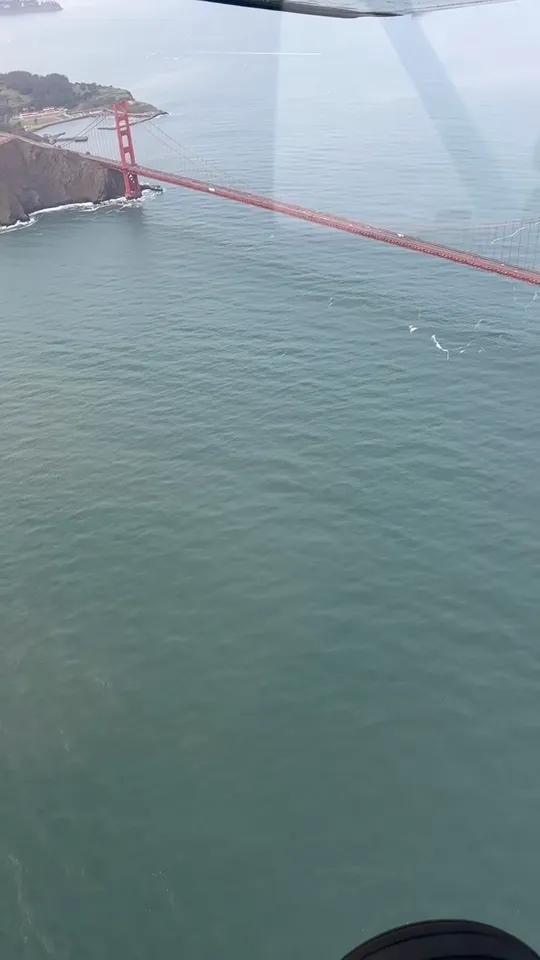
The school as it flies — straight from its Instagram.
Ready When You Are
Start Your Flight Training
Tell us what you want to fly and we will price it against your logbook rather than against a brochure.