

Everything People Ask
Frequently Asked Questions
Getting started, discovery flights, training and licences, cost and payment, and training as a non-citizen — answered in the order people ask them.
Getting Started
Do I need any experience to start flying?
No. Most people who come to us have never touched the controls of a small aeroplane, and some have never been in one. Your first lesson assumes nothing: your instructor explains what’s happening as it happens, and you’ll be flying the aeroplane yourself at some point during it. Curiosity is the only thing you need to bring — everything else is what we teach.
How do I get started?
Two ways. Book a discovery flight — one introductory flight with an instructor beside you, $200 for one passenger — and decide afterward whether you want to continue. Or call us at (279) 777-9570 and tell us what you’re after; we’ll explain how training works and what it costs before you spend anything. There’s no application, no enrollment, and nothing to sign up for.
How old do I have to be?
Our minimum age for a discovery flight is 12, and a regular training programme normally starts at 14. The FAA sets the rest of the milestones: 16 to fly solo and 17 to hold a private pilot certificate. Anyone under 18 needs a consent form signed by a parent or legal guardian, and an adult has to be there for check-in and the briefing. For under-16s that adult stays at the airfield for the whole flight.
Do I need a medical certificate?
Not to fly with an instructor. You’ll need an FAA medical certificate before you fly solo, and a private pilot certificate requires at least a third-class medical, issued by an FAA-designated aviation medical examiner after a fairly ordinary physical. If you have a condition you’re worried about, sort the medical out early rather than after you’ve paid for lessons.
What should I bring to my first lesson?
A government-issued photo ID — a driver’s licence, state ID or passport — is required for anyone 18 or over, and we check documents before escorting anyone into the controlled area. For a minor, bring a school ID or passport plus the accompanying adult’s ID and the signed consent form. Otherwise: comfortable clothes, closed-toe shoes and sunglasses. Bring water, especially in summer. Headsets are provided free of charge, though you are welcome to bring your own compatible one. Skip the heavy meal right before. Nothing to study in advance and no books to buy.
Can I try it once without committing to anything?
Yes — that is what a discovery flight is for. One flight, a published price, and no obligation afterwards: $200 for one passenger, $300 for two or three. There is no membership to join, no enrollment fee and no prepaid block of hours. If you decide to keep going, you pay lesson by lesson at $110 an hour, all in.
Am I too old to learn to fly?
No. The FAA sets minimum ages — 16 to fly solo, 17 to hold a private pilot certificate — and no upper age limit at all. What has to be in order at any age is the medical certificate rather than the birthday, so if you have a condition you are unsure about, get the medical done before you spend anything on lessons. Starting at 35, 50 or 65 changes your schedule and your budget more than it changes your ability to learn, and a discovery flight is the cheapest way to find out how it feels before you commit to anything. The age rules and the whole training path are set out on our private pilot training page.
Is it true that most flight students quit?
Across the industry, yes — only a minority of the people who start training end up holding a certificate. It is rarely about talent. The usual causes are money handed over in advance to a school that then controlled the pace, gaps between lessons long enough that you pay to relearn the last one, and instructors leaving mid-course for airline jobs. We charge lesson by lesson with nothing paid up front, and you keep the same instructor through to the certificate. The full list of reasons, and what we do about each of them, is on our flight lessons page.
Discovery Flights
What is a discovery flight?
A short introductory flight in a small training aeroplane with a certificated flight instructor — a pilot who holds an FAA instructor certificate and teaches for a living. You sit in the front seat, and once you’re up and settled, the instructor typically hands you the controls. It’s a one-time experience rather than a course, and it’s how most people find out whether flying is for them. Full details are on our discovery flight page.
How much does a discovery flight cost?
$200 for one passenger and $300 for two or three. That is the final price for the standard flight: the aircraft, your instructor, fuel, ordinary taxes and airport fees are all in it, and there is nothing to pay on the day. You ask for a date, we hold the slot, and we send a secure payment link. The same flights are available as gift certificates if you are buying for somebody else.
How long does a discovery flight last?
About 45 minutes in the air, and roughly 90 minutes at the airfield in total. The briefing beforehand, the walk-around and the debrief afterwards are part of the experience rather than overhead — plan on being with us longer than you are flying.
Can I bring someone with me?
Yes, up to three guests in the aeroplane: $200 covers one passenger, $300 covers two or three. Passengers ride in the back — the front seat next to the instructor is yours. The Cessna 172S has four seats and the instructor takes one, and we work to a guideline of about 250 lb per guest and 450 lb for the group before the pilot in command does the final weight-and-balance calculation. Tell us everyone’s weight when you book. Anyone just coming to watch waits in the FBO customer lounge.
Does a discovery flight count toward a pilot licence?
It can. If you take the student’s seat, get the briefing and fly the aircraft under your instructor’s supervision, they can log it as dual received toward a private pilot certificate. A group sightseeing ride with no instructional content is not logged as training. Ask us to log it before you fly rather than afterwards.
What happens if the weather is bad?
We reschedule, free, and it does not count against the two reschedules a booking allows — or you can take a full refund. The instructor makes that call, not you and not a forecast app, and sometimes it can only be made on the morning of the flight. Nobody takes a first-time flyer up in wind or visibility that would make the flight unpleasant. Full policy: Terms of Service.
Is a discovery flight worth it?
It is worth it if what you want is an answer rather than a souvenir, and there are three things in the $200 besides the 45 minutes in the air. You find out whether you actually enjoy being at the controls — some people discover they do not, which is a useful $200 either way. If you ask us to log it before you fly, the time counts as dual instruction toward a private pilot certificate, so it is a first lesson rather than a ride. And the briefing and debrief on either side of the flight are time with an instructor who will tell you what training would cost and how long it would take in your case. For comparison, introductory flights advertised elsewhere around Sacramento generally run from about $250 to $425. What the flight consists of, minute by minute, is on our discovery flight page.
Training and Licences
How long does it take to get a private pilot certificate?
It depends almost entirely on how often you fly. Students who fly two or three times a week finish considerably sooner than students who fly twice a month, because less of every lesson goes to re-learning the last one. Weather, medical paperwork, and your own calendar all move the date. We won’t quote you a finish date before we’ve flown with you — anyone who does is guessing. See private pilot training for the full path.
How many flight hours does the FAA require?
The FAA sets a minimum of 40 hours of flight time for a private pilot certificate, including set amounts of instruction and solo flying. In practice most people need more than the minimum, and that’s normal: what decides your checkride date — your final flight test with an FAA examiner — is readiness, not an hour count.
How often should I fly?
More often than most people expect, especially at the start. Flying weekly, or twice a week, keeps skills from fading between lessons; leave three weeks between flights and you’ll spend the first half of each one catching back up. That’s the single biggest reason training gets expensive. If your schedule is tight, longer sessions less often can work — ours run from one to six hours.
What programs do you offer?
Under Part 61: the private pilot certificate, the instrument rating, the commercial certificate (CPL ASEL), the CFI and CFII, and multi-engine training and the MEI in the school’s Piper PA-44 Seminole — with ground instruction running alongside all of them. Rental hours for pilots who do not train with us are flown with other operators around the field; tell us what you need and we will point you to one.
How long is a lesson?
Sessions run from one to six hours. A short one might be an hour in the traffic pattern practicing takeoffs and landings. A long one can hold a briefing, a cross-country flight to another airport, and a debrief in a single block. You book what fits your day — students driving in from farther out often prefer fewer, longer visits.
What comes after a private pilot certificate?
Whatever you want. Plenty of pilots stop there and fly for the pleasure of it: weekend trips, breakfast at another airport, taking family somewhere without an airline. The usual next step for people who want their flying to be useful in more than fair weather is the instrument rating, which we train in our IFR-equipped aircraft. After that comes the commercial certificate and the instructor ratings.
How do I prepare for the FAA written test?
Every private pilot candidate passes an FAA knowledge test — a written exam on regulations, weather, navigation and how the aeroplane works — before the checkride. We support it two ways: a self-study online course from an outside provider (around $300, paid to them), and one-to-one ground instruction with your instructor. There are no scheduled group classes. Your instructor endorses you for the test once you have shown you are ready, not to free up a slot in the diary.
What is involved in adding an instrument rating?
It is the rating that lets you fly in cloud and on a clearance, and it comes after the private certificate. You need a current medical and cross-country time as pilot in command, then instrument training to the aeronautical experience the FAA sets out in 14 CFR 61.65, a knowledge test and a checkride. The difficulty is workload rather than stick and rudder — precision, radio, and staying ahead of the aeroplane — and it is the rating where flying twice a week instead of twice a month makes the largest difference. We fly every hour of it in the aircraft rather than a simulator, at the same $110 an hour. Our instrument rating page goes through the requirements, the difficulty and the cost in detail.
Can I train here to fly for a living?
Up to a point, and it is better to know where the point is. The ladder is the private pilot certificate, then the instrument rating, then the commercial certificate, then the instructor ratings — CFI and CFII — with multi-engine and the MEI flown in the school’s Piper PA-44 Seminole. All of that is taught here. One thing is not: the airline job at the end. Hour building is taught by nobody — it is rental flying, and we rent at $120 an hour wet after a checkout, subject to a training fleet having the aeroplane free. An airline transport pilot certificate generally requires 1,500 hours of flight time, which is why so many career-track pilots instruct on the way there. We are a two-instructor school, not a cadet programme with an airline attached. See commercial pilot training and CFI training.
Cost and Payment
How much does flight training cost per hour?
$110 an hour, all in — the aircraft and your instructor together, fuel and oil included — paid lesson by lesson. No membership, no enrollment fee, no mandatory deposit, no prepaid block. That is deliberate: the loudest complaint in this market is not about aeroplanes, it is about money handed over in advance to a school that then controlled the pace. The full picture is on our pricing page.
What does the hourly rate include?
The $110 covers the aeroplane with aviation fuel and oil included and your instructor beside you — one rate, with nothing to add to it. Time is billed for what you actually use, in tenths of an hour, from the start of the planned briefing to the end of the debrief, and a typical lesson adds 0.3–0.5 hours of ground time to the flight. Separate from it: the FAA medical, the knowledge test fee, the checkride examiner, any online ground course, and your own supplies. We do not mark those up.
Do I need to pay a deposit or join a membership?
No. There is no membership to join, no enrollment fee, and no mandatory deposit or prepaid block before your first lesson. You pay lesson by lesson, so if you need to pause for a month you simply pause, with nothing sitting here to reclaim. You can top up a training balance in advance if you prefer — it is intended to be used within 12 months and is held in dollars rather than at a locked-in rate. To be precise about the rate: the aircraft and the instructor are two lines on the invoice, and third-party costs such as the medical and the examiner are paid to those providers. Every figure is on the pricing page.
How do I pay?
Visa, Mastercard, American Express and Discover, plus ACH bank transfer, Zelle and cash. We do not take personal cheques or cryptocurrency, and there is no surcharge for paying by card. Nothing is bought on this site: card details go into the payment provider’s own fields and are never stored on our website. For a discovery flight the order is: you ask for a date, we hold the slot, then we send a secure payment link with 24 hours to use it. After payment you get written confirmation, the cancellation policy and a request for your preferred dates, guest count and weights; we confirm the booking in writing by the end of the next business day.
What does a private pilot certificate cost in total?
Our typical total budget is $11,500–$13,000. We plan around 65 to 75 flight hours rather than the 40-hour legal minimum, because almost nobody finishes in 40, and the range covers the flying at $110 an hour all in, plus what goes to the medical examiner, the testing centre, the checkride examiner, an online ground course and your own supplies. That is a planning range, not a package price. The variable is the hour count, and it depends mostly on how often you fly. Full breakdown: flight training cost.
Is it financially worth it to become a pilot?
That depends on which of two things you are buying, and it is worth being clear about it before you start. If you are learning to fly for your own sake, it is a purchase rather than an investment: our planning range for a private pilot certificate is $11,500–$13,000, and what comes back is the flying, not the money. If you mean it as a career, the honest arithmetic is that the private certificate is the first of several — instrument, commercial, the instructor ratings — followed by the hours it takes to reach an airline’s minimums, so it is several years and considerably more money before any of it pays back. The very large pilot salaries that turn up in search results belong to senior captains at major airlines late in a career, not to a newly certificated pilot. We are not the people to build your financial plan, but we can be exact about the part of the bill that comes to us: every figure is on the flight training cost page.
What do the ratings after the private certificate cost?
The flying is the same $110 an hour, all in, so what changes between ratings is how many hours each one takes. The instrument rating is the one we will not price from a web page: the total depends on how much cross-country pilot-in-command time is already in your logbook. The rest have the school’s own planning ranges, all excluding the examiner’s fee — the commercial certificate $8,000–$15,000, the initial CFI $5,500–$8,000, the CFII $3,500–$6,000, and the MEI $4,500–$7,500 in the Seminole. Those are planning ranges, not package prices. Tell us your logbook totals and we will work out what is actually left to fly.
Can I train if I’m not a U.S. citizen?
Yes — you don’t have to be a U.S. citizen to train with us. Federal rules require non-citizen flight students to be cleared through a TSA security program before flight training begins, so there’s paperwork and a waiting period to plan around. Start with our page on training as an international student, then call us.
How does the TSA process work?
You create and manage the application yourself through the TSA’s Flight Training Security Program, pay the government fee and provide your documents; we register as your training provider and endorse the training request. Covered training cannot start before the approval is in place. Plan on three to six weeks — that is realistic, not guaranteed, and it is not within our control. We have taken non-citizen students through it before. See international students.
Do you teach in Russian?
Yes — with Denis Vyatkin, who owns the school and speaks English and Russian. Russian-language instruction is available by appointment rather than on demand seven days a week. You can have your briefings, questions and debriefs in Russian while you learn radio phraseology and standard terminology in English, because English is what you will use in the air and with an FAA examiner.
Do I need to speak English?
You’ll need working English. The FAA requires the ability to read, speak, write, and understand English for a pilot certificate, and your checkride is conducted in it. What that doesn’t require is fluent small talk. If Russian is your first language, we teach in it, and the aviation English comes with the training rather than before it. Didn’t find your question? Call (279) 777-9570 or send us a message — we’d rather answer it than have you guess.
Which Programme Fits You
Five questions, about a minute. It asks what you want out of flying and what your week looks like, and it names the certificate that matches — no phone call, and nothing to pay.
From The Flight Line
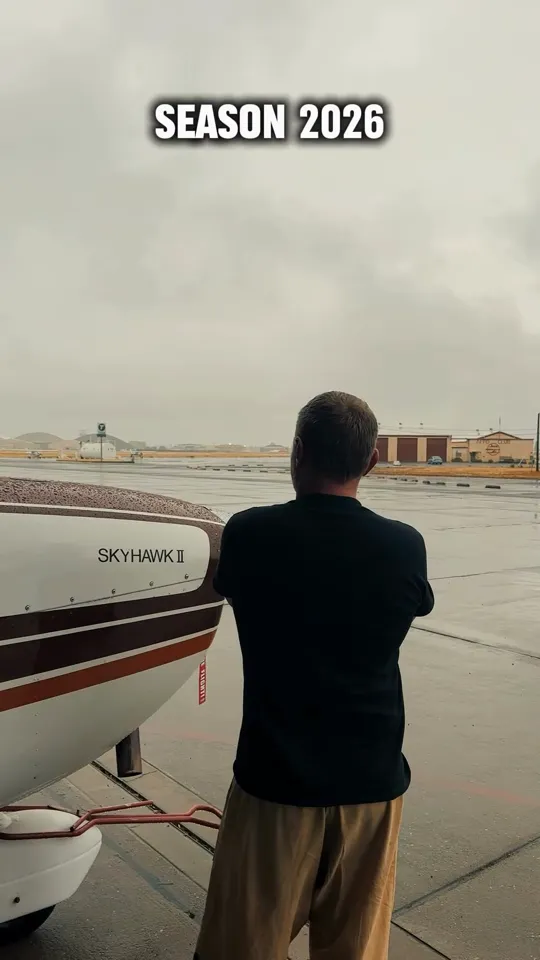
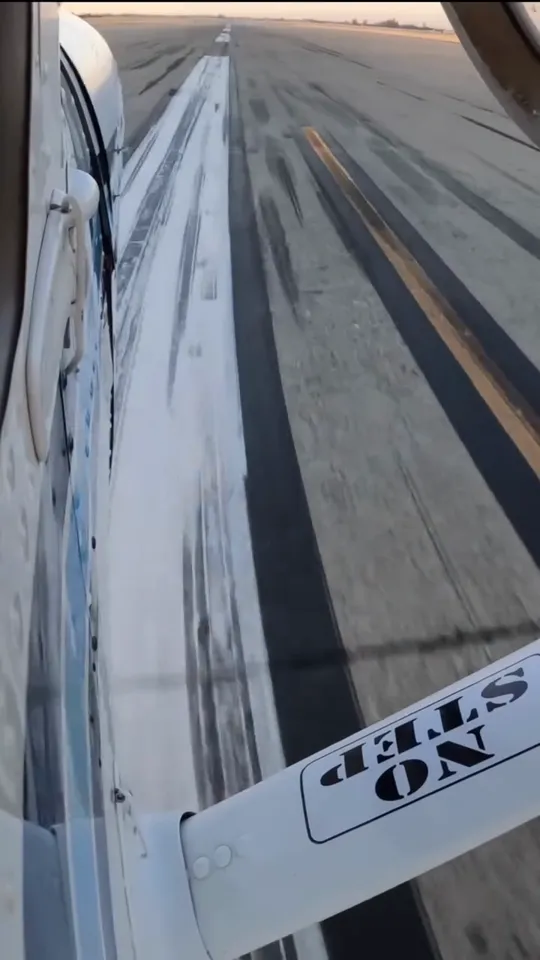
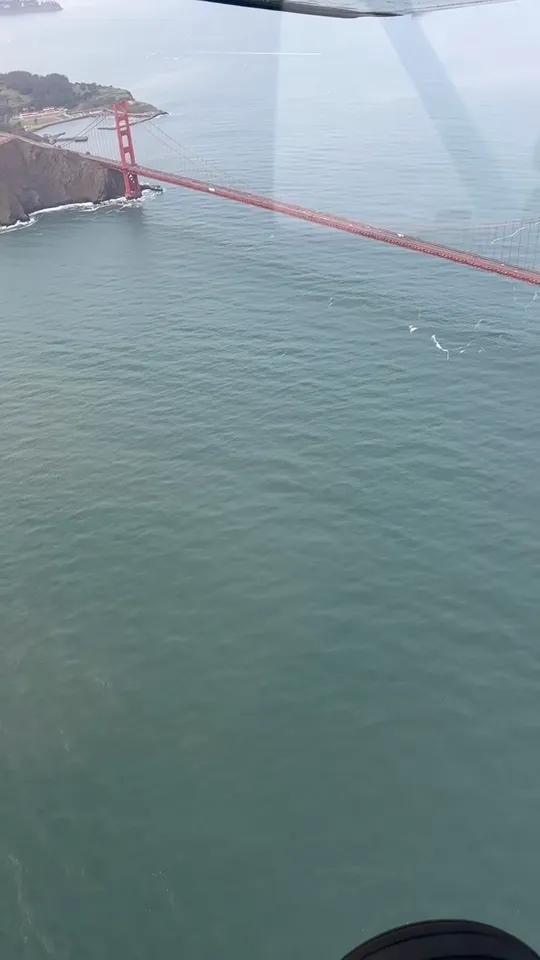
The school as it flies — straight from its Instagram.
Still Wondering?
Ready To Fly?
If your question is not here, call and ask it. A phone call settles in three minutes what an email thread takes two days to cover.