
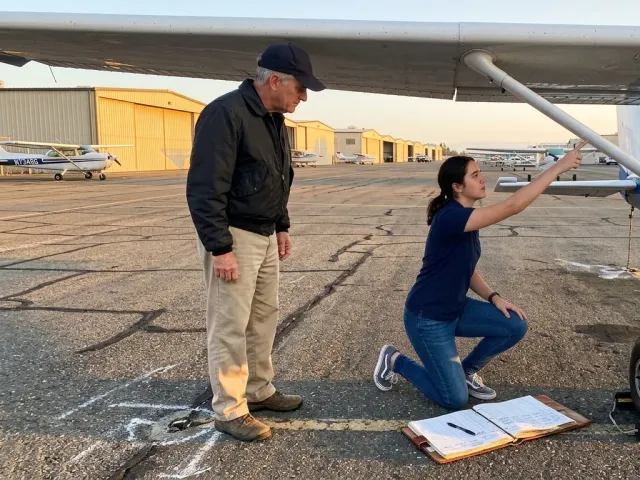
People with no experience at all
The most common starting point. You do not need to know anything about aeroplanes, and you do not need to decide anything about your future before booking.

Flight Lessons · One At A Time
From McClellan Airport, ten minutes north of downtown Sacramento. $110 an hour, the aircraft and your instructor together. Sessions run from one to six hours. You do not have to enrol in anything, commit to a licence, or know what you are doing.
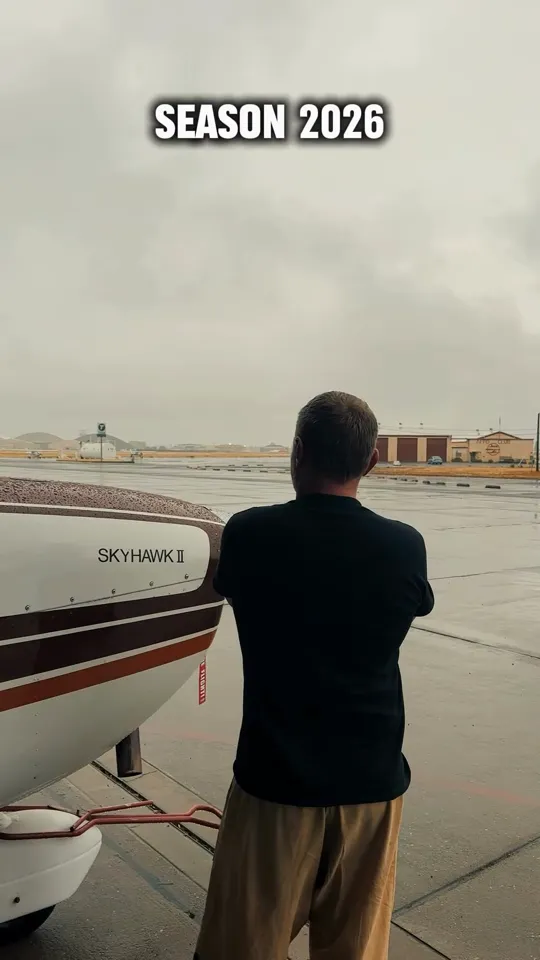
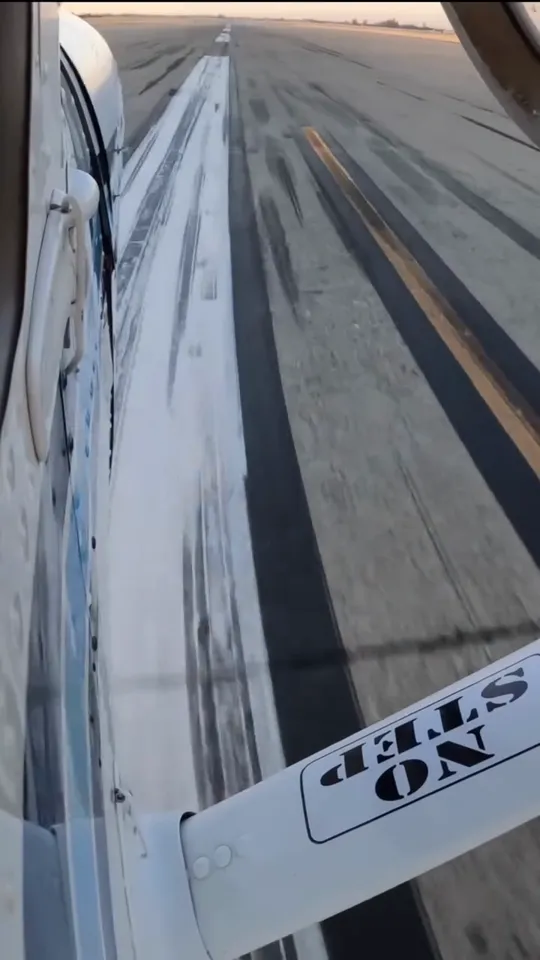
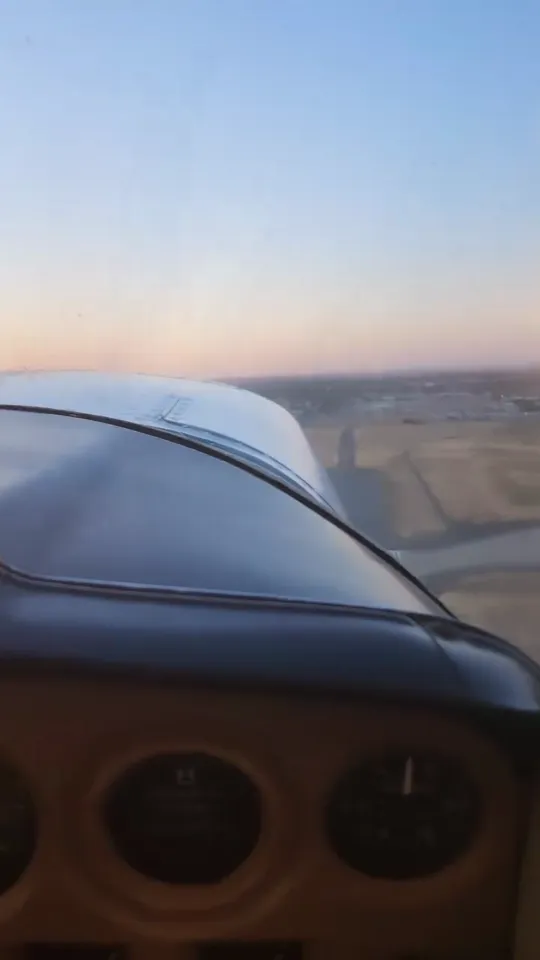
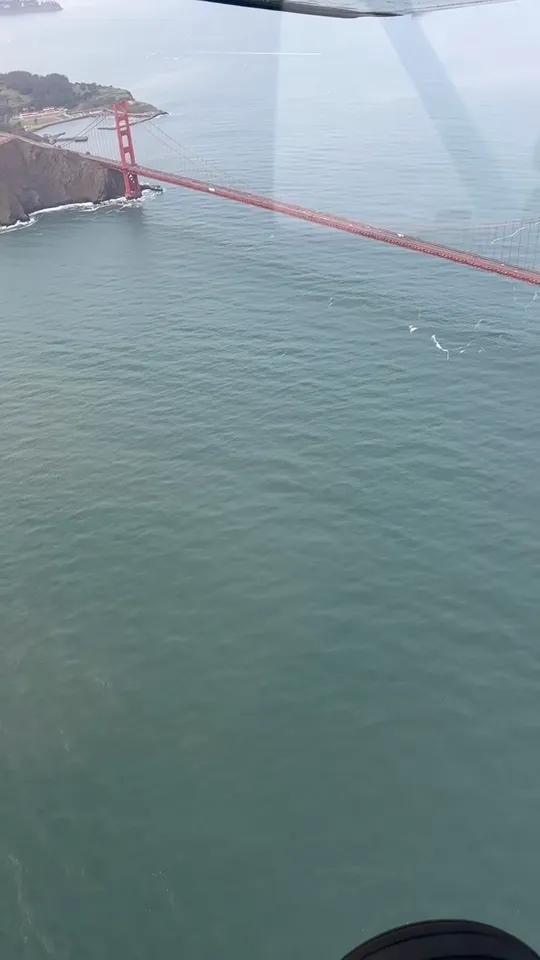
The school as it flies — straight from its Instagram.

$110an hour of flight education, all in
One rate: the aeroplane with fuel and oil in it and your instructor beside you, billed as actual time in tenths of an hour from the start of the briefing to the end of the debrief. You pay lesson by lesson: no membership fee, no mandatory deposit, no monthly minimum, no prepaid block required.
Every lesson is built the same way, whether it is your first or your fortieth.
You and your instructor sit down and go over what this session is for: the manoeuvre you are learning, where you will fly, what the weather is doing, what “good” looks like today. Usually ten to twenty minutes, and it is where most of the confusion gets removed before it costs you aeroplane time.
You inspect the aeroplane with your instructor — fuel, oil, control surfaces, tyres, lights. You will do this before every flight for the rest of your flying life, so you start learning it on day one.
You are in the left seat. The instructor handles what you have not learned yet and hands the aeroplane to you for the rest, which on a first lesson usually means climbs, turns and level flight once you are clear of the airport. There are two sets of controls; the instructor can take over instantly at any moment.
Back on the ground you go over what happened: what worked, what needs another try, and what to read before next time. Your instructor writes the flight in your logbook.
Sessions run from one to six hours. An hour is enough for basic handling or for take-offs and landings in the traffic pattern close to the field; longer sessions exist for flying somewhere, with the planning that goes with it. A first lesson usually runs about 90 minutes at the airfield for roughly 45 minutes in the air, and ground time is typically 0.3–0.5 hours, billed at the same $110.
Five kinds of people, and none of them has to want a licence.
The most common starting point. You do not need to know anything about aeroplanes, and you do not need to decide anything about your future before booking.
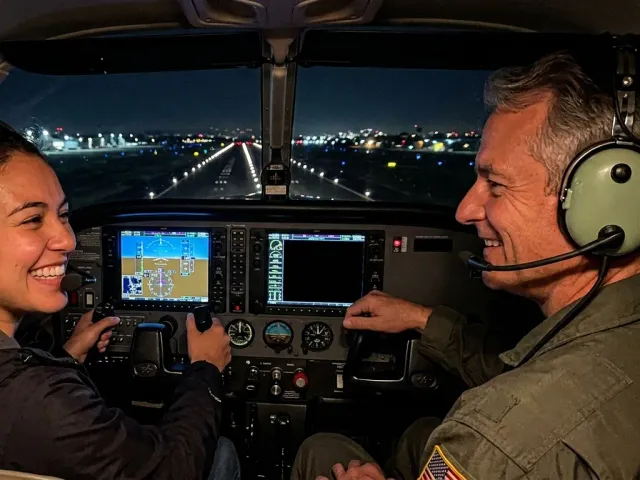
Perfectly normal, and nobody here will push you towards a certificate. Some students fly a few lessons a year purely for the enjoyment of handling an aeroplane, and flying occasionally with an instructor is a genuine way to be part of aviation.
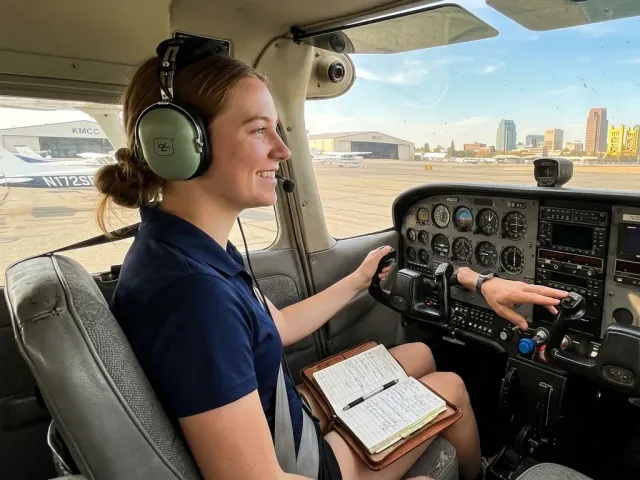
Three or four lessons tell you far more than any amount of reading: whether you like the workload, whether the motion bothers you, whether you look forward to the next one. If the answer is yes, those hours are already in your logbook.
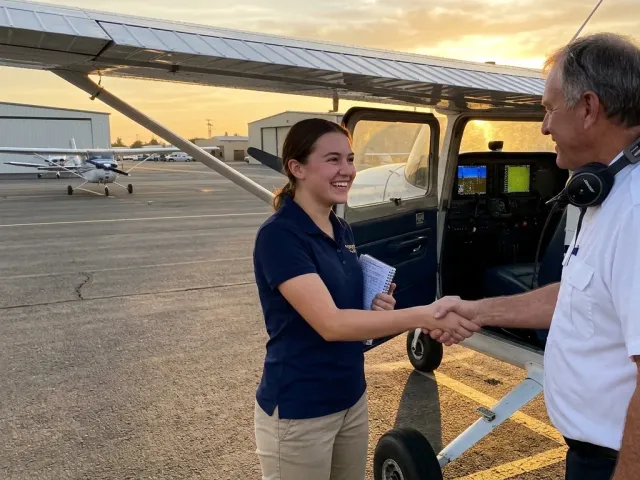
Lapsed pilots, students who stopped years ago, anyone with a logbook in a drawer. Come and fly a lesson and find out where you actually stand — nobody is going to be surprised by rust.
If more than one of those descriptions fits, five questions will settle it. It asks what you want to be able to do and how often you can fly, then names the path — about a minute, and nothing to pay.
It is the question people ask before they ask about price: is it true that most student pilots quit? Broadly, yes. Across the industry only a minority of people who start training end up holding a certificate, and nobody in the business enjoys saying so.
The reasons are boringly practical, and none of them is a lack of talent.
We cannot make the middle of training glamorous, and we will not pretend otherwise. The other three we can do something about, and the way this page is priced is most of the answer.
There is no course to enrol in and no block to buy. You pay $110 for the hour you fly, one hour at a time. Nothing is paid in advance, so nothing can be stranded: if you stop after two lessons, you have spent two lessons. If you come back in eight months, nothing has expired.
We fly every day from 7 AM to 7 PM, and until 9 PM in summer by arrangement. Flying weekly is a scheduling choice you can actually make here, not something you queue for. And we say plainly on this page that long gaps cost you money in re-learning — because knowing that in advance is what lets you plan around it.
On the instructor: we are a small school with our own aircraft, and you meet the person who will teach you before you commit to anything. Ask them directly how long they plan to be here. It is a fair question, every honest instructor expects it, and the answer tells you more about your chances of finishing than any statistic on a website.
Both put you at the controls with an instructor beside you, and people mix them up. The difference is what happens afterwards.
The hourly rate is easy to quote and hard to plan around, so here is the shape of it in a month rather than an hour.
A typical lesson is one and a half to two hours in the aircraft with a briefing either side, which comes to roughly $165 to $220 for the flying. One lesson a week is about $700 to $900 a month. Fortnightly is half that, and slower for more than the obvious reason — the gaps cost you time in the aeroplane relearning.
Nothing is prepaid and nothing expires. Fly three weeks in a row and then nothing for two months, and the only cost is the rust. That is deliberate: this page exists for people who are not ready to commit to a course, and a course you have already paid for is the thing that stops feeling like a choice.
Less than people expect. The aeroplane, the headset and the charts are ours.
Call us or send the form and we will set the date, the instructor and the aircraft with you. The office answers Monday to Friday, 10 AM to 5 PM.
We fly every day, 7 AM to 7 PM — and from sunrise until 9 PM in summer by arrangement. We fly Saturdays and Sundays, and those slots fill first. Night lessons happen only as part of a training programme, arranged with your instructor.
How often you come back is entirely up to you if you are flying for enjoyment — once a month is fine, and nothing expires. If you are working toward something, frequency starts to matter: skills fade between flights, and a long gap means spending part of the next lesson catching up.
Lessons get moved for wind, visibility or heat. Northern California gives us a lot of flyable days, but the instructor makes the call — not you, and not a forecast app. If we cancel for weather you choose a free reschedule or a full refund, and it does not count against your two reschedules.
We are at Sacramento McClellan Airport, 3028 Peacekeeper Way, McClellan Park. Park in the guest spaces in front of the main FBO entrance, come into the lobby, and give our name at the desk.
Finding us at McClellanNot a syllabus — a picture of how the early sessions usually go. The order shifts with the weather and with you.
You are assigned one primary instructor and fly with them each time, with the second as backup — nobody has to re-evaluate you at the start of every lesson. You can switch without a penalty if the fit is wrong; we hand over your syllabus, endorsements and lesson notes.
Denis Vyatkin (Pilot & Owner, teaching in English and Russian) and Sergio (Certified Flight Instructor). Instruction is available in English and Russian.
Meet the instructorsMost lessons are flown in one of the four-seat, high-wing Cessnas the school owns — the IFR-equipped 172N, or the 172S with its Garmin G1000 glass panel. The two-seat Cessna 150 is the cheapest way to repeat circuits, and the Piper Seminole is the twin.
The first thing most students notice from the left seat is how much of the world you can see over a high wing in a turn.
See all four aircraftYou are not required to go anywhere with this. But if a few lessons turn into wanting the certificate, nothing restarts — the flights are already logged, your instructor already knows how you fly, and the training simply continues with a defined end point: solo, cross-country flying, the written exam, and a checkride with an FAA examiner.
The practical differences when you decide to go for it: you will need a medical certificate and a student pilot certificate before flying solo, you will start the ground study in earnest, and flying two or three times a week starts to matter for both your progress and your total cost.
Private pilot trainingMost people who start training do not finish it, across the industry. The usual reasons are money committed up front, gaps between lessons long enough that you pay to relearn, and instructors moving on to airline jobs mid-course. We sell lessons by the hour with nothing paid in advance, we fly seven days a week so weekly lessons are actually schedulable, and you meet your instructor before you commit to anything.
None. Most people who book a lesson have never touched the controls of an aeroplane, and you do not need to decide anything about your future before booking.
Sessions run from one to six hours, and you pick the length with your instructor. A first lesson usually runs about 90 minutes at the airfield for roughly 45 minutes in the air.
No. There is no course to enrol in and no obligation to take a second lesson. You pay lesson by lesson, with no membership, deposit or prepaid block.
Yes — you are in the left seat and you fly most of the lesson. The instructor handles what you have not learned yet, and there are two sets of controls so they can take over instantly.
Yes. Flown with an instructor and logged as dual received, they count toward a certificate whether or not you decide to pursue one at the time.
Book A Flight Lesson
Never flown with us before? A discovery flight is the usual first step. Already have a logbook? Call and we will set up a lesson.