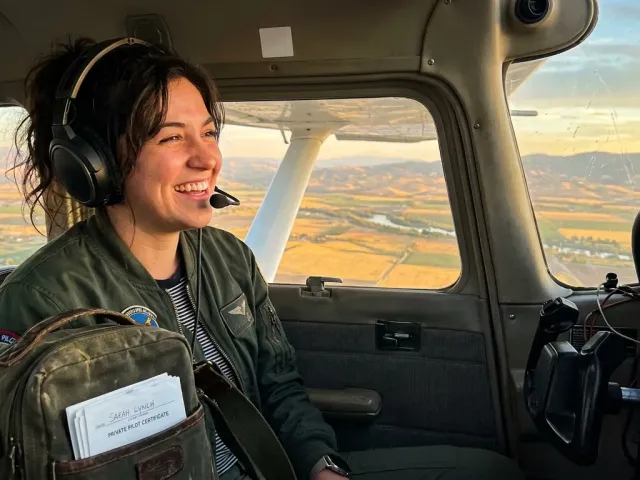
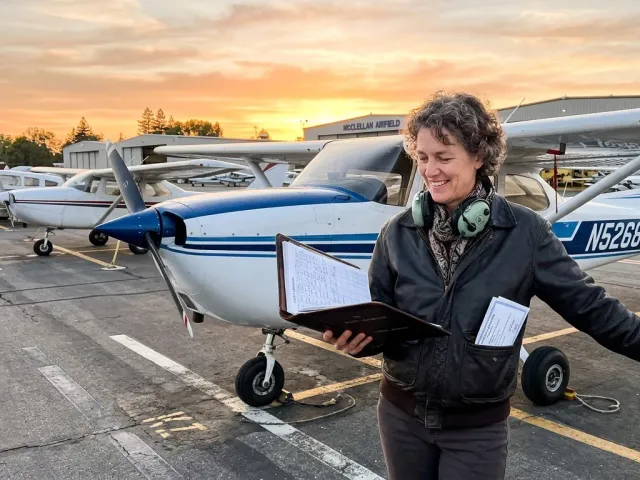
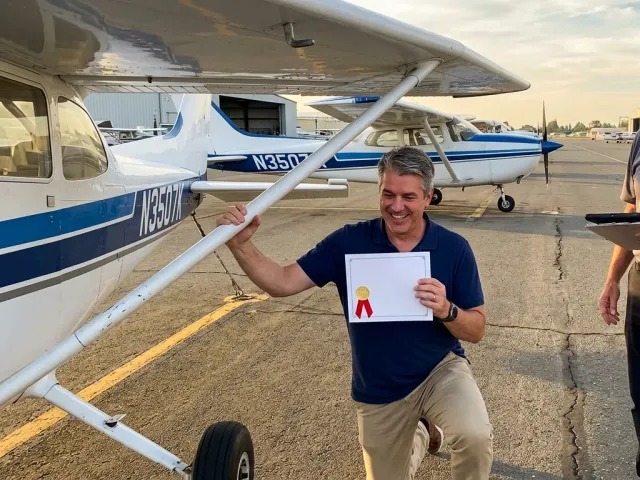
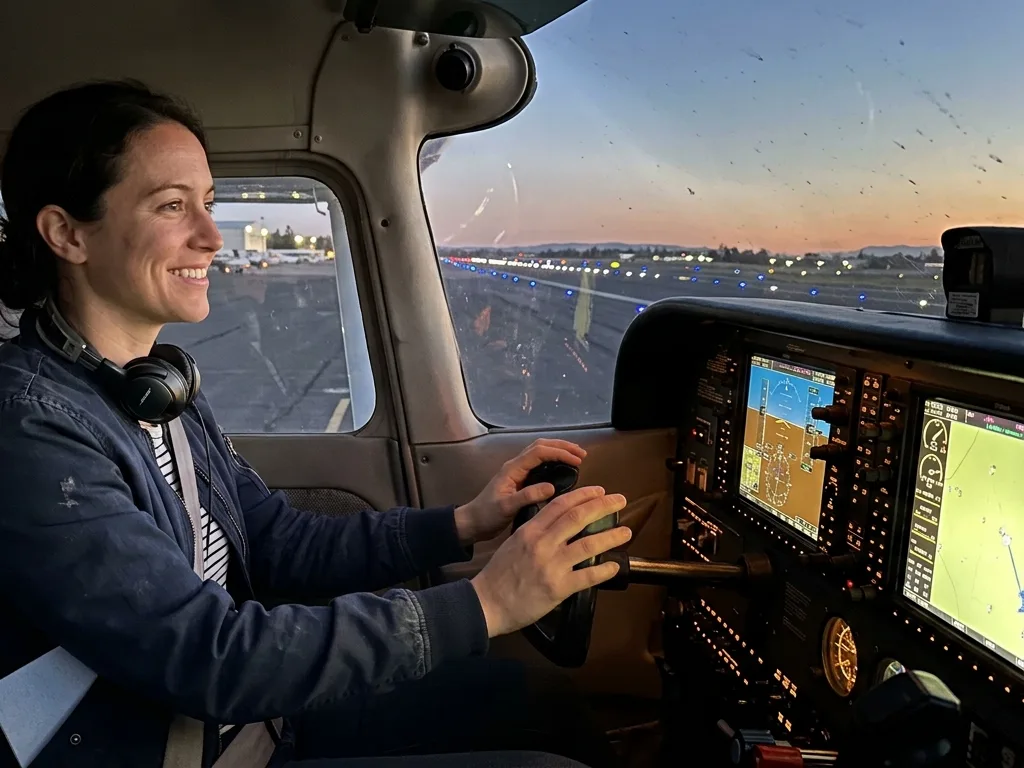
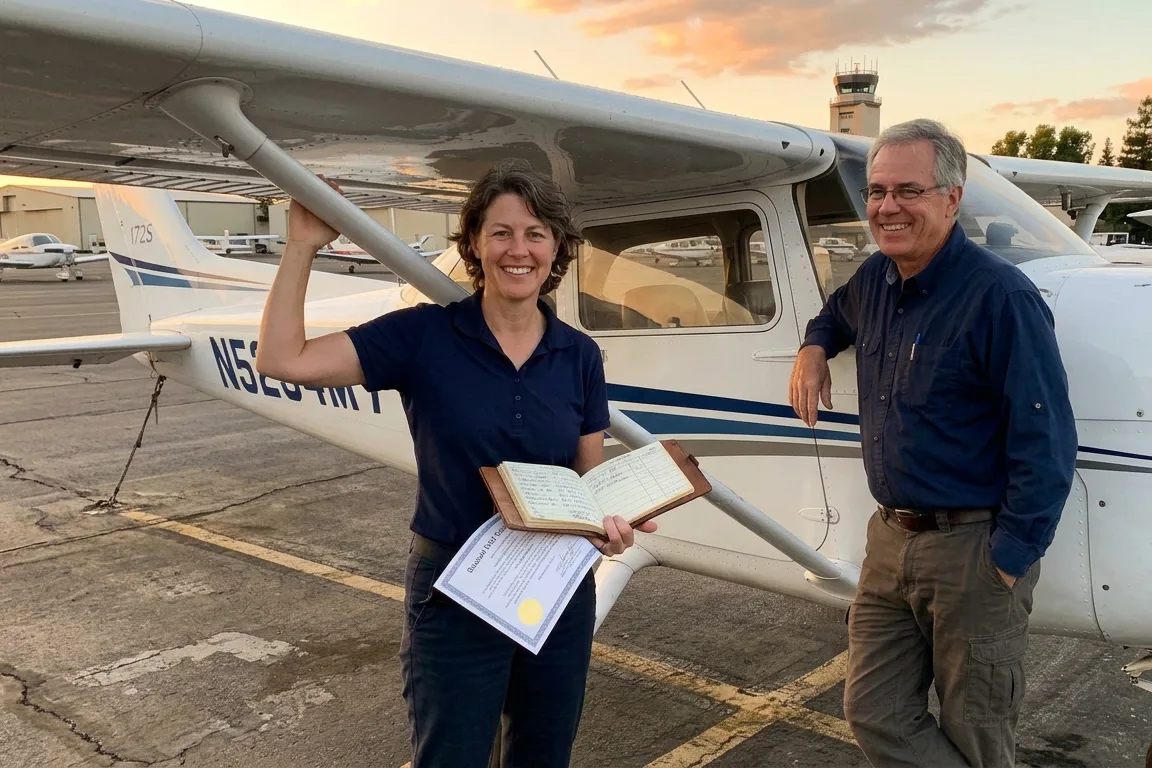
A student and instructor walking out to the aircraft at McClellan

Private Pilot Certificate · Part 61

Become A Private Pilot At McClellan

Train seven days a week at Sacramento McClellan, pay for the lessons you fly, and take the controls from the first hour. No membership, no deposit, no package to sign.

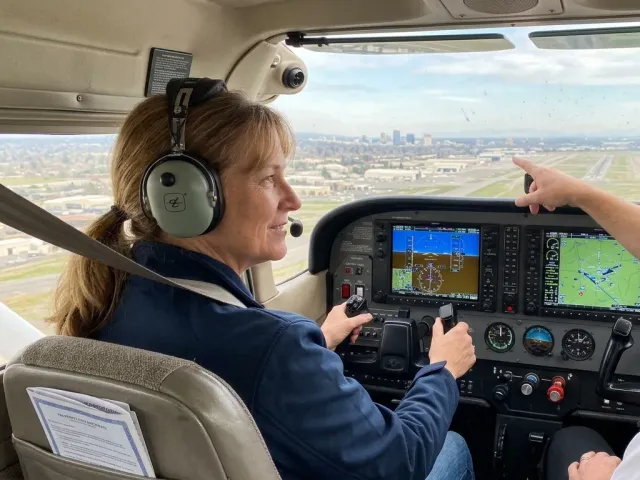
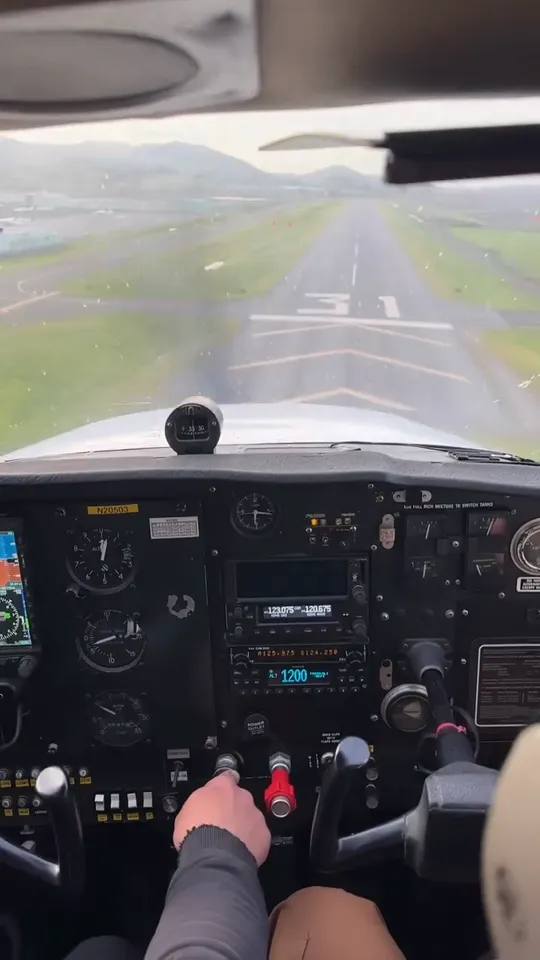
The cockpit of the training aircraft in flight

What An Hour Costs

$110an hour of flight education

One rate, and it is the whole rate: the aircraft and your instructor together, with fuel and oil included. You pay lesson by lesson — no enrollment fee, no membership, no mandatory deposit. The medical, the knowledge test and the checkride examiner are paid directly to the people who provide them, and the cost page lists each figure so you can budget the whole certificate up front.

$110
the aircraft and your instructor, per hour
$0
enrollment, membership and deposits
Who Trains Here

Who This Training Is For

Four reasons people start, and all four of them finish.

A light aircraft over the coastline on a clear afternoon

To fly for the enjoyment of it

Weekend flights over the Sacramento Valley, breakfast at an airport an hour away, taking your kids up for the first time. This is the largest group of private pilots, and it is a perfectly good reason to start. Nobody here will ask you to justify it or try to sell you a career track you did not come for.

Aircraft on the ramp at sunset

To travel differently

A small aeroplane turns a five-hour drive into a shorter flight to a field close to where you are actually going — Tahoe, the coast, the Sierra foothills. It takes planning and it depends on the weather, but it is real transport, and it is the reason many students finish.

Pilots at work on an airliner flight deck

To fly for a living

The private pilot certificate is the first rung. Everything above it — commercial, instructor, multi-engine — is built on the skills you learn here. If that is your goal, tell us at the start so the training is structured with it in mind rather than retrofitted later.

A student running the pre-flight walkaround on a Cessna

With no aviation background at all

Most of our students have none. You do not need a maths degree, perfect eyesight or military experience. We teach in English and in Russian, so language is not a barrier either.

What You Get

What The Certificate Lets You Do

A private pilot certificate is the FAA licence that lets you fly a small aeroplane yourself and take passengers with you — for travel and for fun, not for pay. You earn it by flying with an instructor, studying on the ground, flying solo, and finally passing a checkride: your final flight test with an FAA examiner. Almost everyone starts the same way, with one flight to see how it feels. If you have never touched the controls of an aeroplane, that is the normal starting point, not a disadvantage. Once you hold the certificate you are the pilot in command — nobody has to sit next to you, and nobody has to sign you off for each flight.

A student pilot alone in the left seat after first solo
  • Fly single-engine aeroplanes you are trained and endorsed for, as pilot in command.
  • Take passengers with you — family, friends, your dog — as long as nobody is paying you to fly them.
  • Fly day or night in good visual weather, anywhere in the United States.
  • Share the operating cost of a flight with your passengers, within the limits the FAA sets.
  • Rent an aeroplane instead of owning one, once a school checks you out in that aircraft.
  • Use it as the required first step toward a commercial certificate.

What it does not cover: flying for hire, and flying in cloud or low visibility. Instrument flying is a separate rating and separate training. Privileges and limitations are set in 14 CFR 61.113, and the aeronautical experience the certificate needs is in 61.109 — both are linked below, because they are the FAA's rules rather than ours.

14 CFR 61.113 — privileges and limitations
How Training Runs

The parts that decide whether you finish, said plainly.

You Pay by the Hour

$110 an hour, the aircraft and your instructor together. You fly a lesson, you pay for that lesson, and that is the transaction. There is no enrollment package to sign and no course fee to pay up front.

No enrollment fee, no membership, no mandatory deposit. You are not buying a place in a programme, so if you need to pause for a month because of work or money, nothing of yours is locked up here. To be precise about what the rate covers: the aircraft and your instructor are one line on the invoice, and the medical, the knowledge test and the checkride examiner are paid directly to the people who provide them.

You pay lesson by lesson — card through Stripe, ACH, Zelle or cash — or top up a training balance in smaller amounts if you prefer.

What the Hourly Rate Covers

$110 buys the aeroplane with fuel and oil in it and the instructor sitting beside you — there is no second rate to add. Time is billed in tenths of an hour, in the air and on the ground, from the start of the planned briefing to the end of the debrief. A typical lesson adds 0.3–0.5 hours of ground time to the flight.

Sessions run from one to six hours. A short session is enough for take-offs and landings in the traffic pattern. A longer one is what you need for a cross-country flight to another airport and back, where most of the useful learning in the second half of training happens. We plan the length of each session around what you are working on next, not around a fixed timetable.

Scheduling and How Often to Fly

This is the single biggest thing under your control. Flying skills are physical memory and they fade fast: three weeks between lessons and the first part of the next flight goes into re-learning what you already paid to learn. Students who fly twice a week generally reach the checkride with fewer total hours than students who fly twice a month — which makes the frequent schedule the cheaper one, not the more expensive one.

Once a week still works. It is slower and it costs more in total hours, but plenty of people earn the certificate this way around a full-time job. The pattern to avoid is flying only whenever things calm down.

We fly every day from 7 AM to 7 PM, and in summer from sunrise until 9 PM by arrangement. Weekend slots go first, so book them ahead. The office answers Monday to Friday, 10 AM to 5 PM; at a weekend your instructor may be in the air. Northern California gives us a lot of flyable days, and when wind, visibility or heat would spoil a lesson we move it — free, and never against your reschedule allowance.

Staying on Track

What separates the students who reach a checkride from those who drift is almost always the same short list, and every item on it is something you can plan for: gaps between lessons long enough that each flight starts with review; a budget built on the legal minimum that runs out with the cross-countries still ahead; ground study left until late, so the written exam becomes the bottleneck; changing instructors partway through; and life — a job change, a move, a new baby. Here is how we keep those from deciding your outcome.

  • Protect two or three slots a week and treat them like appointments you cannot move. Frequency is the one thing that reliably lowers your total.
  • Start the ground study in week one, not month six. Reading about airspace the night before you fly through it is worth more than any other homework.
  • Stay with one instructor through the certificate where possible, so nobody has to re-evaluate you.
  • Budget for realistic hours, not the minimum, and keep a reserve. Running out of money at 80% completion is the most expensive way to stop.
  • Pay as you fly. A pause costs you time, not money you have already handed over — if you need to step away for two months, step away.

Your Instructor

Across this market, students talk about their instructor far more than they talk about their school, and that matches what we see: the person in the right seat sets the pace, the standard, and whether you look forward to Saturday morning.

You are assigned one primary instructor and train with them through the certificate, with the second as backup — you are not handed to whoever is free that day. You can change instructors without a penalty: we talk through why, check the other instructor has room, and hand over your syllabus, endorsements and lesson notes. Instruction is available in English and in Russian, by appointment.

The Route

The Path, Step By Step

Seven stages. They overlap in practice — ground study runs alongside flying — but this is the order things happen in.

  1. Discovery flight

    You sit in the left seat with an instructor beside you and take the controls once you are established at altitude. It answers the only question that matters at the start: do you actually want this? Bring someone — we fly one to three passengers.

  2. Student pilot and medical certificates

    Two documents before you fly solo: a student pilot certificate, applied for through the FAA’s online system, and a medical certificate from an FAA-authorised examiner. Neither is needed for your first lessons. Get the medical early anyway — if a condition needs paperwork you want to know at the beginning.

  3. Ground training and the written exam

    Weather, navigation, airspace, regulations, systems, and how an aeroplane actually flies. It ends in the FAA knowledge test at an approved centre. Students who work through this early get more out of every flight hour, because the flying stops being a series of unexplained procedures.

  4. Dual flight instruction

    You and an instructor in the aeroplane together. Take-offs and landings, climbs, descents, turns to a heading, stall recovery, engine failure on the checklist, the radio, and the traffic pattern until it becomes ordinary. Landings take most people longer than they expect, and that is normal.

  5. First solo

    When your instructor is satisfied you can handle the aeroplane and the airport alone, they sign your logbook, step out, and you fly three take-offs and landings by yourself. Everything before it is preparation; everything after it is expansion.

  6. Cross-country flying

    Plan a route, calculate fuel and time, check weather, navigate, and land at airports you have never seen — first with your instructor, then solo, including a longer solo cross-country and some night flying. Northern California is generous here.

  7. Checkride

    The final test with an FAA-designated examiner: an oral exam and a flight demonstrating the manoeuvres to FAA standards. Your instructor will not endorse you until your performance is consistently at that level. Pass and you leave with a temporary certificate the same day.

The FAA minimum is 40 hours under 14 CFR 61.109, and in general practice students reach the checkride somewhere between 60 and 75 hours, depending mostly on how often they fly. Budget against the realistic figure, fly regularly, and your instructor will review where you stand at every stage.

Before You Start

What You’ll Need

Government photo ID
First lesson
Standard for flight training and for the airport environment.
Logbook
First lesson
Your instructor records each flight; it becomes your permanent record.
Medical certificate
Before first solo
From an FAA-authorised Aviation Medical Examiner. Private privileges need at least a third-class medical; how long it stays valid depends on your age at the exam.
Student pilot certificate
Before first solo
Applied for through the FAA’s online system with your instructor. There is no FAA fee.
TSA approval
Before training begins
Non-U.S. citizens only. A federal requirement under the Flight Training Security Program.
Headset
First lesson
Borrow or buy. Ask us before you buy one — you can fly your first lessons before deciding.
The school’s Cessna 172S on the ramp at McClellan

The Aeroplane

The Aeroplane You Learn In

Private pilot students fly the two four-seat Cessnas — the IFR-equipped 172N for most of the certificate, and the G1000-equipped 172S when it is time to meet a glass panel.

Cessna 150 · Cessna 172N IFR · Cessna 172S G1000 · Piper PA-44 Seminole · $110 an hour, all in

The Aeroplane

Four aircraft, and the private pilot certificate is flown in the two four-seat Cessnas.

What You’ll Fly

The four-seat Cessna 172N, IFR-equipped, for most of the certificate — and the Cessna 172S with its Garmin G1000 glass panel when it is time for that. Flight education is $110 an hour, all in.

The panel is deliberately a mixed one: traditional flight instruments with dual Garmin G5 electronic displays, a Garmin GNS 430W navigator and ADS-B In/Out, and no autopilot. You learn to fly on the traditional instruments and then add the electronic displays, which is the order most examiners want to see and the order that leaves you able to fly the aeroplane when a screen goes dark.

There is no autopilot, so you hand-fly everything — which for a training aircraft is the point, and it is what builds the stick-and-rudder habits an examiner looks for. The 172N is IFR-equipped, so when you go on to the instrument rating it is trained in the same aeroplane, flown in real weather.

Maintenance

It is maintained under the applicable FAA requirements, goes through 100-hour and annual inspections, and is not dispatched with an unresolved condition affecting airworthiness. The decision to release it belongs to the authorised mechanic and the pilot in command, each within their own authority.

Scheduled maintenance is planned around the training diary, and regular students hold a repeating weekly slot so their lesson is reserved well ahead. Weekends go first, so it is worth claiming one at the start.

The Numbers

What It Costs

We plan a budget around 55 flight hours, not the 40-hour legal minimum, because almost nobody finishes in 40.

Paid to the school

$110 an hour

  • Flight education — the aircraft and your instructor$110/hr
  • Fuel and oilincluded
  • Enrollment, membership, depositsnone

Paid to other people

varies

  • Ground course, medical, knowledge testvaries
  • Checkride examinervaries
  • Headset, charts and suppliesvaries

Typical total budget$12,000–$17,000

A planning range, not a guaranteed package price. What moves it is the hour count, and that depends on how often you fly and how well you prepare between lessons. Call us and we will build the estimate around your situation.

Questions

Private Pilot Training FAQ

Still have questions? Call (916) 907-5812

How old do I have to be?

There is no minimum age to take lessons — if you can reach the controls and see over the panel, you can learn. The FAA does set two age milestones: you must be 16 to fly solo in an aeroplane and 17 to hold the private pilot certificate itself. There is no upper age limit; what matters at any age is the medical certificate, not the birthday.

Do I need a medical certificate before my first lesson?

No. You can fly with an instructor on board before you have one. You will need it before your first solo flight, and we suggest scheduling the exam early in your training rather than late — an Aviation Medical Examiner appointment is easy to book, and if anything in your history needs documentation, it is far better to find out in month one. A third-class medical is the one private pilot privileges require.

How many flight hours will I need?

The FAA publishes a minimum of 40 hours, and across the industry it is common to reach the checkride somewhere between 60 and 75. Your own number depends mostly on how often you fly and how well you prepare between lessons, so we budget around the realistic range and review where you stand at each stage.

How long does it take in calendar time?

That depends on your schedule more than anything else. Two to three lessons a week moves quickly; one lesson a week takes considerably longer; irregular flying takes longest of all and costs the most. Weather, aircraft availability and your own work and family calendar all move the date, so we set the pace with you at the start and adjust it at every stage review.

Do I have to prepay for a block of hours?

No. You pay lesson by lesson — $110 an hour, all in — with no enrollment fee, no membership and no mandatory deposit. That is deliberate: it means you are never a creditor of your own flight school, and pausing training does not cost you anything you have already paid.

Can I train if I am not a U.S. citizen?

Yes — citizenship is not a requirement to train with us. Non-U.S. citizens complete a federal security approval through the TSA before flight training toward a certificate begins; it usually takes three to six weeks, so start it before you plan your first lesson and we will register as your training provider. Our international students page walks through the whole sequence.

Do I need to speak English? Do you teach in Russian?

We teach in both English and Russian, so you can learn in the language you think in. The FAA does require English proficiency for the certificate itself — radio communication and the checkride are conducted in English — so English is part of the training rather than optional. Bilingual instruction makes the ground work faster; it does not replace the requirement.

@divaflight

Training, As It Happens

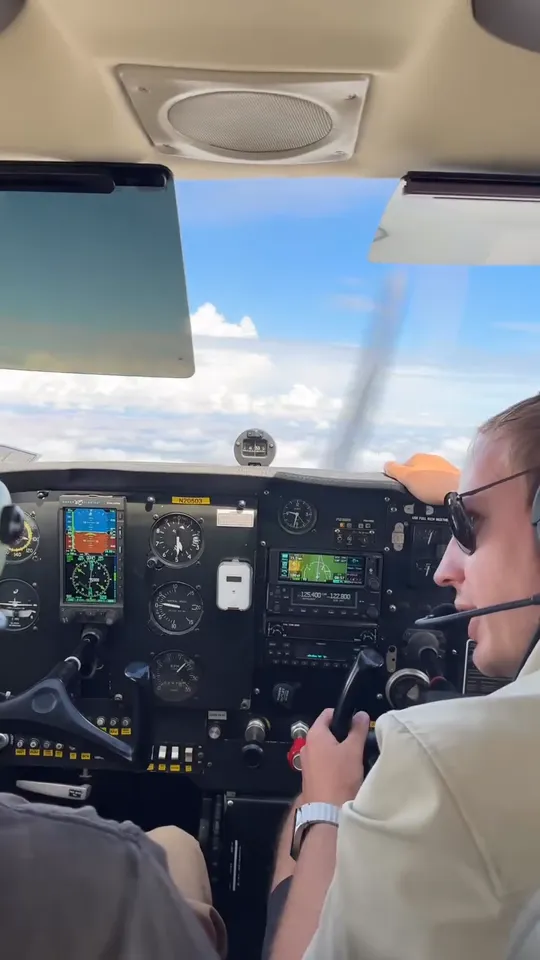
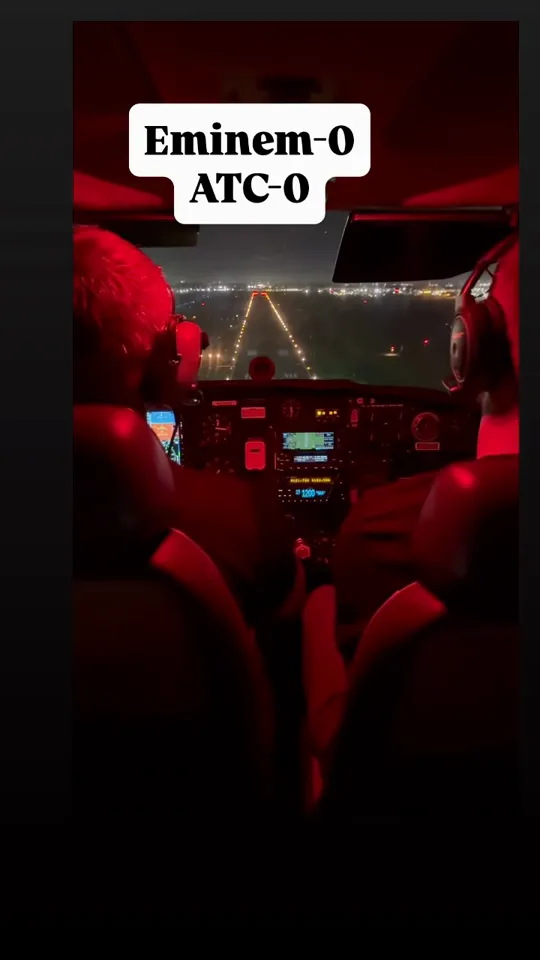
Moments from private pilot training on the school’s Instagram — why students start, and what the flying looks like.

Ready When You Are

Start Your Flight Training

Book a discovery flight and take the controls, or call and talk it through with an instructor first.