
Multi-Engine · Part 61
Add The Twin Without Changing Schools
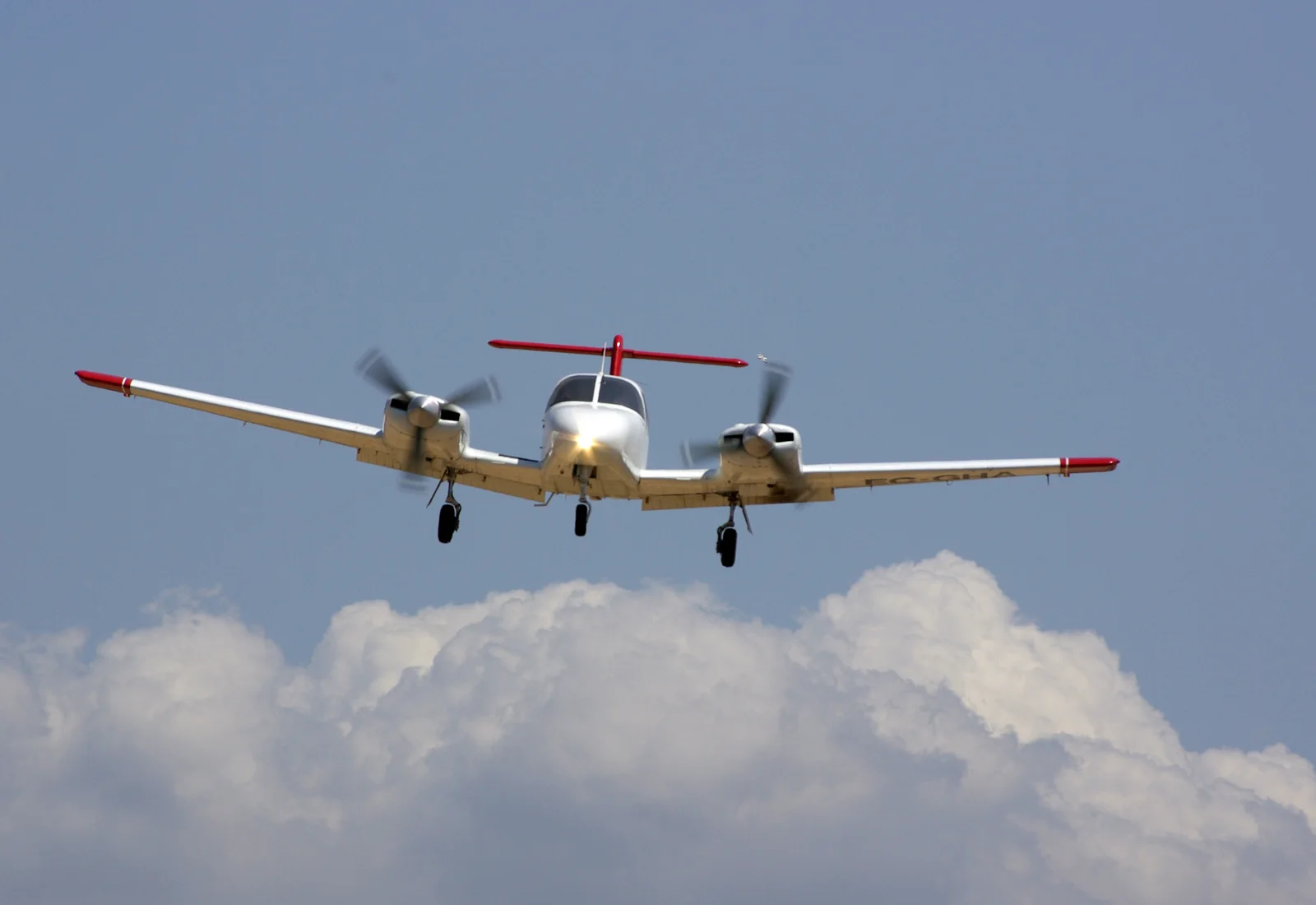
The multi-engine rating and the multi-engine instructor certificate, flown in the school's own Piper PA-44 Seminole at Sacramento McClellan. A school this size usually sends you across the field for the twin. This one does not have to.

What It Costs
$110an hour of flight education, all in
The same rate as everything else here, in the twin as in the Cessnas — the aeroplane and your instructor on one line, with fuel and oil in it. Multi-engine time is short and dense, so the total is driven by how ready you arrive rather than by how many weeks you spend. The MEI range below is the school's own planning figure; the multi-engine rating on its own we quote against your logbook, because what is left to fly depends entirely on what is already in it.
- $4,500–$7,500
- MEI, typical budget
- quoted
- multi-engine rating, against your logbook
Two Engines, And What The Second One Actually Costs You
A multi-engine rating is an add-on to a certificate you already hold, and it is mostly a course in what to do when half the aeroplane stops.
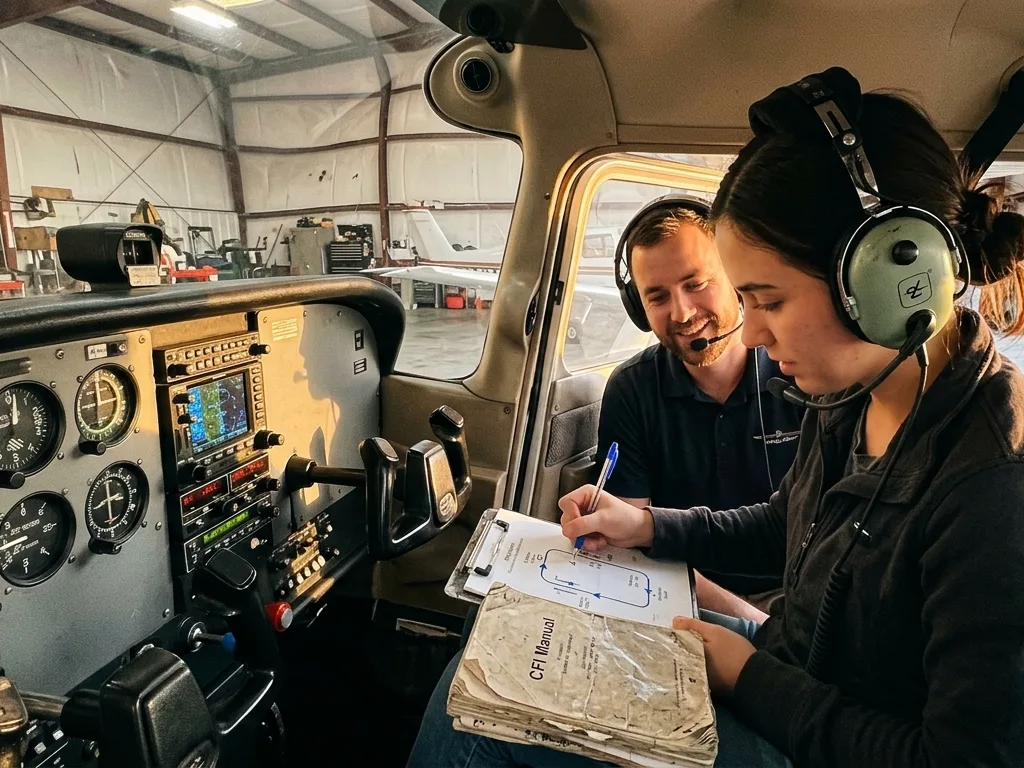
- Almost every professional flying job that pays is flown on a twin, so the rating is the step between a commercial certificate and a first job.
- The flying itself is short — this is a rating measured in hours, not months, once you hold the certificate underneath it.
- What takes the time is engine-out work: identifying the dead engine, holding the aeroplane straight, and deciding whether to continue or land.
- The MEI goes one further and asks you to teach all of that from the right seat while a candidate is doing it wrong.
For the multi-engine rating you need a pilot certificate to add it to, and a current medical. For the MEI you need a commercial certificate, a multi-engine rating and a current CFI. Bring the logbook and we will tell you which of those you are missing before you spend anything.
The aeroplane, who teaches it, and the parts candidates are least warned about.
The Aeroplane You Fly It In
The Piper PA-44 Seminole is a four-seat twin, and it is the aircraft the multi-engine rating and the MEI are flown in here. It sits on the same ramp as the Cessnas, on the same schedule, at the same hourly rate.
That matters more than it sounds. The usual arrangement for a school this size is to teach everything up to the commercial and then hand you to an operator across the field for the twin — which means a new checkout, a new instructor who does not know your flying, and a gap in the middle of the one rating where continuity helps most. Here the aeroplane changes and nothing else does.
See all four aircraftEngine-Out Work Is The Course
A multi-engine rating is not a course in flying a bigger aeroplane. Straight and level on two engines is easier than a Cessna. The rating exists for the ten seconds after one engine quits, and almost all of the training time goes there: identifying which engine failed, keeping the aeroplane pointing where you want it, and being honest about whether continuing is a better idea than landing.
It is drilled because it has to be automatic. A twin with an engine out is less forgiving than a single with an engine out, not more, and the accident record for the rating is mostly about pilots who got the identification wrong under pressure. Expect to fly it until the response stops requiring thought.
How Many Hours It Actually Takes
It is the first thing anybody asks, and the reason it is hard to answer is that the regulation does not answer it either. Adding a class rating to a certificate you already hold carries no hour minimum: the rule asks for training in the required areas of operation, an instructor's endorsement that you are proficient, and a practical test. There is no forty hours to work towards the way there is for the private certificate.
That is why the courses advertised elsewhere as ten hours, or as five days, are packages rather than requirements. Ten hours is a fair planning figure for somebody current in a single-engine aeroplane. It stretches for anyone rusty, for anyone new to retractable gear and constant-speed propellers, and for anyone slow to make the engine-out drill described above automatic. Nothing about it gets shorter because the budget would prefer it to.
The other half of the answer is diary rather than flying. There is one twin, it is shared with the other students on it, and the checkride has to fit an examiner's calendar as well as yours. Flying here runs every day from 7 a.m. to 7 p.m., so consecutive days are a question of the aeroplane's schedule rather than of the school's opening hours.
14 CFR Part 61 on eCFRWho Teaches It
Denis oversees the multi-engine stages, as he does the commercial and the instructor certificates. If you are already training here, the person who set your syllabus is the person flying the twin with you rather than somebody meeting you for the first time on the day.
If you are coming from outside, bring the logbook to the first conversation. What is left to fly is a logbook question before it is a money question, and we would rather tell you that on the phone than after you have paid for an hour to find out.
Meet the instructorsWhat The Rating Costs, In Round Numbers
Quoting the rating against your logbook is honest and also unhelpful if what you are trying to work out is whether you can afford it at all. So, while you find the logbook, here is the arithmetic to do in the meantime.
Ten hours of dual in the Seminole at the published rate is $1,100, because the aeroplane and the instructor are one line here rather than two lines that add up. That is arithmetic and not a quote — the real number is the one we work out from what you already hold — but it is the right order of magnitude to plan against. On top of it sit the examiner's fee, which is paid to the examiner, and whatever ground time you and your instructor agree you need.
It is worth knowing what the same ten hours costs elsewhere. Schools that publish a package for this rating mostly land between about $3,000 and $5,000 for the flying, with the twin billed well above the singles and the instruction billed separately again. The difference is not a discount. It is that the Seminole belongs to the school, so it is charged at the school's rate instead of at a rate set by whoever owns the twin across the field.
Commercial pilot trainingWhat You Pay Other People
The hourly rate covers the aeroplane and the instructor and nothing else, here as everywhere on this site. The examiner's fee for the checkride is paid directly to the examiner, and the medical to the examiner who issues it.
The MEI range on this page excludes the examiner. It is a planning figure built from the school's own syllabus, not a package price, and what moves it is the same thing that moves every other figure here — how many hours you need, which depends on what you can already do when you arrive.
The full rate cardWhat The MEI Is For, Beyond The Certificate
People ask what a multi-engine instructor earns before they ask what the certificate costs. The honest answer is that it varies by employer and we are not going to invent a figure for somebody else's payroll. The part that is arithmetic rather than opinion is what the MEI does to the price of multi-engine time.
Multi time is the currency of the hiring minimums, and there are two ways to come by it: buy it, or be paid to teach in it. A hundred hours of multi time bought at $110 an hour is $11,000. The same hundred hours logged from the right seat is worked rather than bought, and that, rather than the certificate on its own, is what the $4,500 to $7,500 above is being spent on.
What this page will not do is imply a seat at the end of it. The school is two instructors, and an MEI flown here is a certificate, not a job offer. If instructing is where you are heading, say so at the first conversation and we will tell you plainly where that stands rather than after you have paid for the course.
CFI and CFII trainingDo You Really Fly The Twin Here?
Yes. The Piper PA-44 Seminole is one of the school's four aircraft and lives on the same ramp at Sacramento McClellan as the Cessnas. The multi-engine rating and the MEI are both flown in it.
How Long Does The Multi-Engine Rating Take?
It is a short rating in flying terms, and how short depends almost entirely on what you already hold and how recently you flew it. Ten hours is the figure the rest of the market builds its packages around and a fair one to budget against. The regulation sets no minimum of its own, so what you actually fly is settled against your logbook rather than against a number published on a page that has not seen it.
What Do I Need Before The MEI?
A commercial certificate, a multi-engine rating and a current CFI. If you are missing the multi-engine rating, that is the thing to add first, and it can be flown here in the same aeroplane.
Is The Rate Different In The Twin?
No. Flight education is $110 an hour, all in, in the Seminole exactly as in the Cessnas — the aeroplane and your instructor together, with fuel and oil included.
Is There A Minimum Number Of Hours For The Rating?
No. Adding a multi-engine class rating to a certificate you already hold has no hour minimum written into the regulation — it asks for training in the required areas of operation, an instructor's endorsement that you are proficient, and a practical test. The ten hours you see advertised elsewhere is a package figure, not a rule.
Do I Have To Take Another Written Test?
Not for the multi-engine rating. Adding a class rating to a certificate that already carries an airplane category rating does not call for an additional knowledge test. The endorsement and the practical test are what stand between you and the rating.
Is The MEI Worth It Financially?
It depends on what the alternative is. Multi-engine time bought at $110 an hour costs $110 an hour; multi-engine time logged while instructing is paid for by somebody else. That is the argument for the MEI, and it is why most people who fly it are heading for a job that counts multi time rather than for the certificate itself.
Can I Rent The Seminole?
The school's aircraft fly with its students rather than on rental. If you hold a multi-engine rating and want hours rather than instruction, tell us what you are trying to do and we will tell you honestly whether we are the right place for it.
From The Flight Line
The school as it flies — straight from its Instagram.
Ready When You Are
Bring The Logbook
Tell us what you hold and what you are aiming at, and we will tell you what is left to fly and what it costs before you book anything.